
Live 3D Spatial Mapping
Reason OnDataText
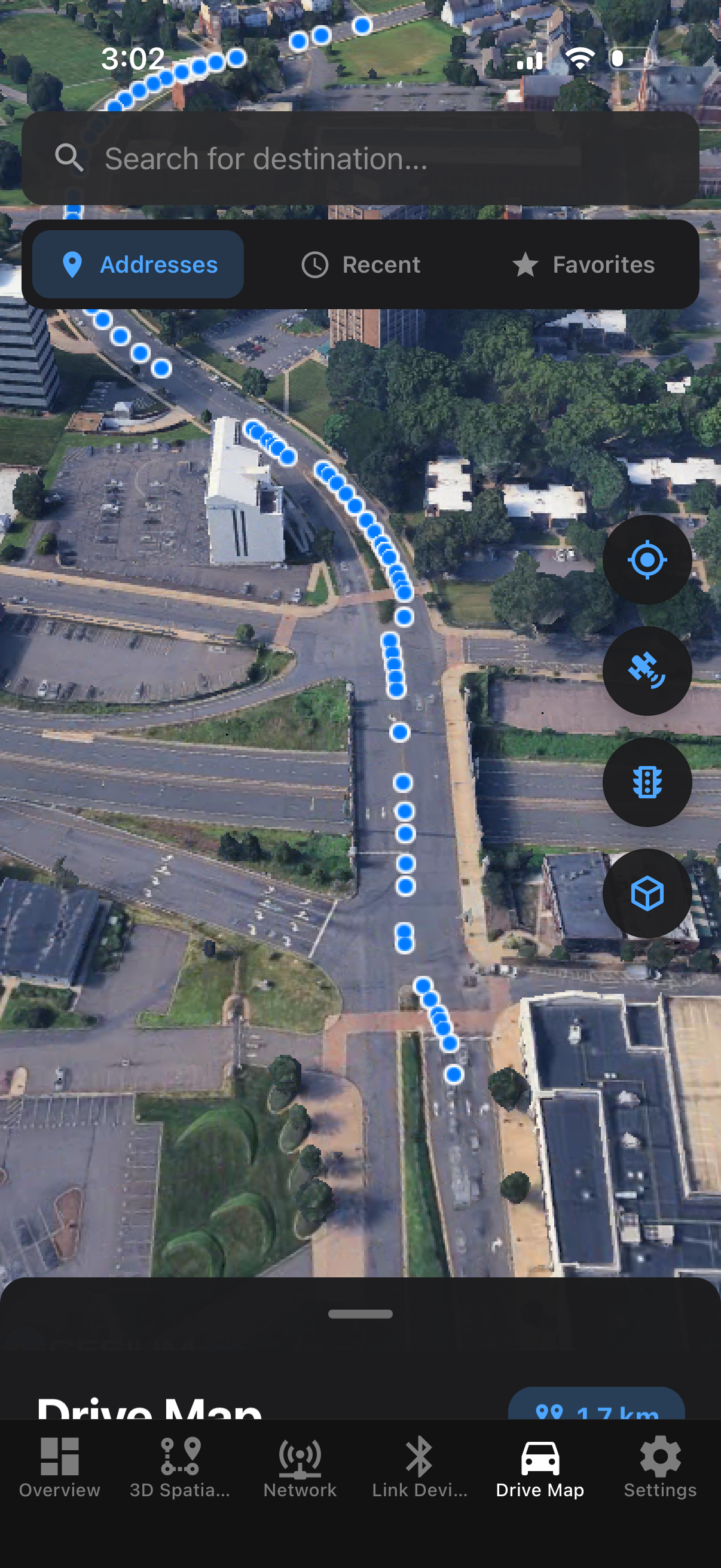
Multimodal Spatial Inputs
Combine point clouds, camera frames, maps, sensor readings, location traces, and metadata into one model context for spatial reasoning.
Structured Answers
Ask for fit checks, object relationships, scene state, route constraints, or risk signals and receive outputs your application can use directly.
Context Across Systems
Reason over live feeds, historical data, and external systems together so decisions reflect the full operating picture.
Developer-Ready API
Send spatial data through a simple responses API and get typed results, usage metadata, and request IDs for production workflows.
Understand the Physical World
Spatial Relationships
Identify objects, boundaries, distance, orientation, containment, occlusion, and proximity across complex real-world scenes.
Physical Constraints
Understand fit, stability, collision, reachability, line of sight, and movement constraints before acting in the world.
World State Reconstruction
Convert partial observations into useful 3D state: reconstructed structure, tracked objects, and scene-level understanding.
Predict The Future
Future Position Estimates
Project where objects, devices, vehicles, or people are likely to move next based on live state, motion history, and spatial constraints.
Simulation Scenarios
Run what-if scenarios across physical environments: routing, placement, congestion, collision risk, coverage, and operational outcomes.
Actionable Forecasts
Return structured predictions and recommended actions your systems can use for alerts, planning, routing, and automation.