
Workbench + API
Four Cad
CAD and drawings, made agent-readable.
The reference workbench for people, and the extraction API underneath it. Upload a STEP, IGES, DXF, PDF, SVG, or draw.io file and get structured JSON: entities, dimensions, annotations, solids, faces, and diagram topology. No OCR anywhere in the path, so a dimension is read, not guessed.
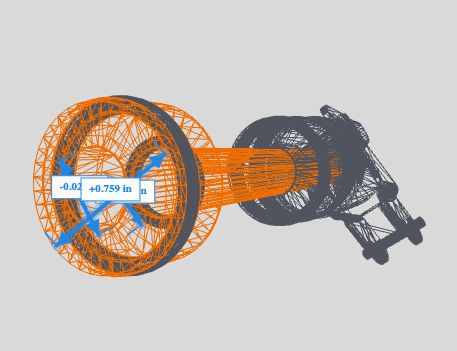
- STEP and IGES parsed to B-rep solids and faces with exact volumes
- DXF, PDF, and SVG parsed to vector entities, dimensions, and annotations
- draw.io diagrams parsed to nodes, containers, directed connectors, and spatial relations, not text
- Emits four-cad.extraction.v1 — a stable, versioned schema
- Upload, run, and compare revisions in the browser, then copy the request
Why it is not OCR
OCR reads a picture of a drawing and returns text that is approximately right. Four Cad reads the vector layer the CAD tool wrote, so entities keep their coordinates, dimensions keep their values, and nothing is transcribed. Files with no vector layer are out of scope; we would rather return nothing than return a plausible number.
A stable schema
Extractions are versioned. four-cad.extraction.v1 gives you entities, dimensions, solids with faces, and annotations, plus a compatibility point_cloud_scene for older pipelines. Build against the version, not against whatever we shipped last week.
- entities — vector geometry with coordinates
- dimensions — measured values with their references
- solids / faces — B-rep topology with exact volumes
- annotations — drawing text with placement
The workbench is not a demo
It runs against the production runtime with your key and your billing, and every run exposes the exact API request that produced it. Get the behaviour right by clicking, then paste the request into your own service.
Billing
Extraction is metered as spatial tokens like every other request: uploaded bytes count as input, the returned JSON counts as output. There is no separate per-file fee, and failed extractions are not billed.
Also in the product line